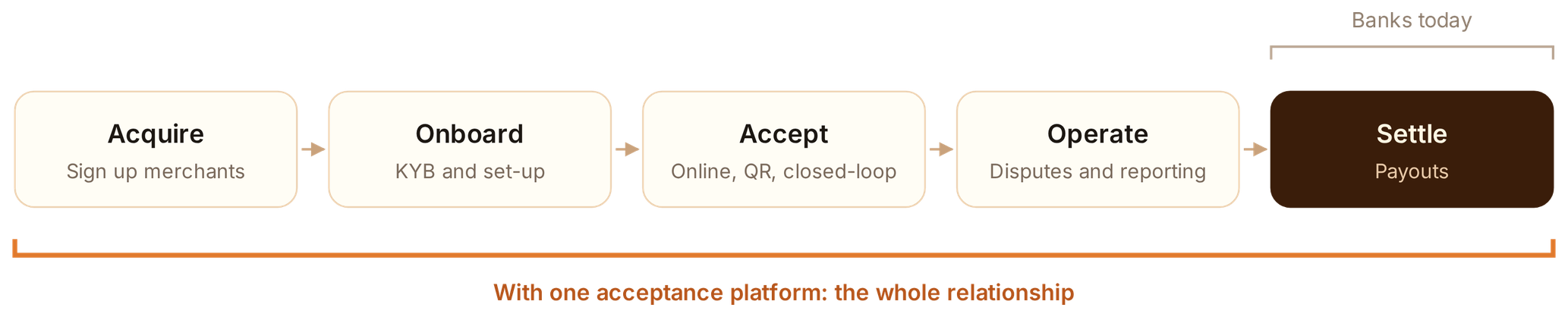
Most banks only touch merchants at settlement. A modern acceptance platform
puts the bank in every step, from sign-up to payout.
Expand merchant propositions
Own merchant relationships
Retain transaction data
Simplify operations
Build new revenue streams
Control merchant pricing
Solution areas
Five merchant solutions. One platform.
Pick the acceptance models you need. They share one merchant, processing and
settlement layer.
ONBOARDING
Digitize the merchant lifecycle, from onboarding to operations
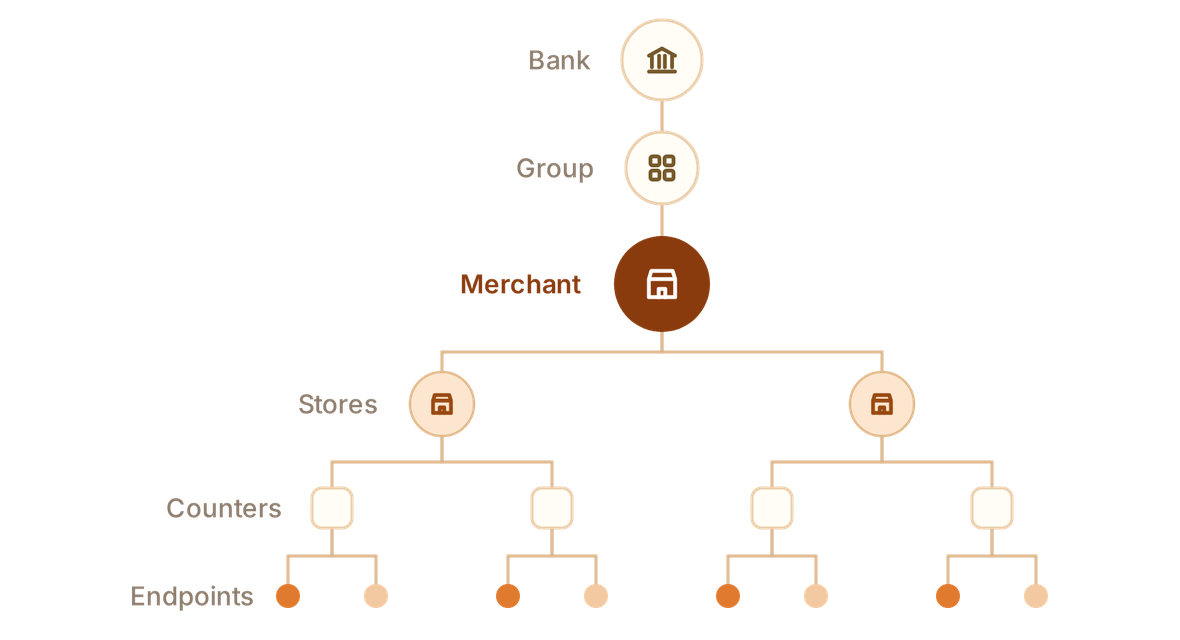
Onboard and manage every business, store, counter and endpoint in
one hierarchy.
Rules-driven onboarding
KYB, approvals and workflows set by merchant type.
Flexible merchant hierarchy
Groups, merchants, stores, counters and endpoints in one model.
360° merchant view
Transactions, balances and compliance in one place.
Merchant self-service
Merchants manage users, reports and acceptance themselves.
Online checkout
Power bank-owned digital checkout
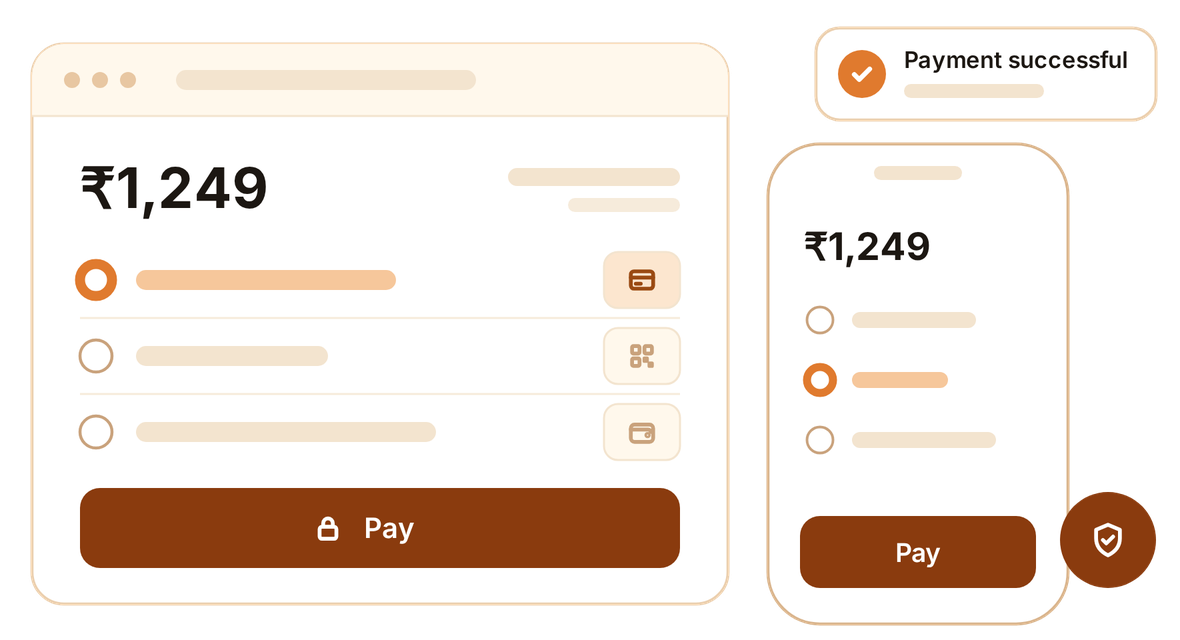
Bank-owned checkout and gateway for web, mobile and embedded
journeys.
Unified checkout
Cards, UPI, net banking and wallets in one flow.
Hosted or embedded
Hosted pages, APIs or journeys embedded in the merchant app.
Fast integration
APIs, SDKs and webhooks for merchant developers.
In-store QR & UPI
Accept QR and UPI payments at the counter
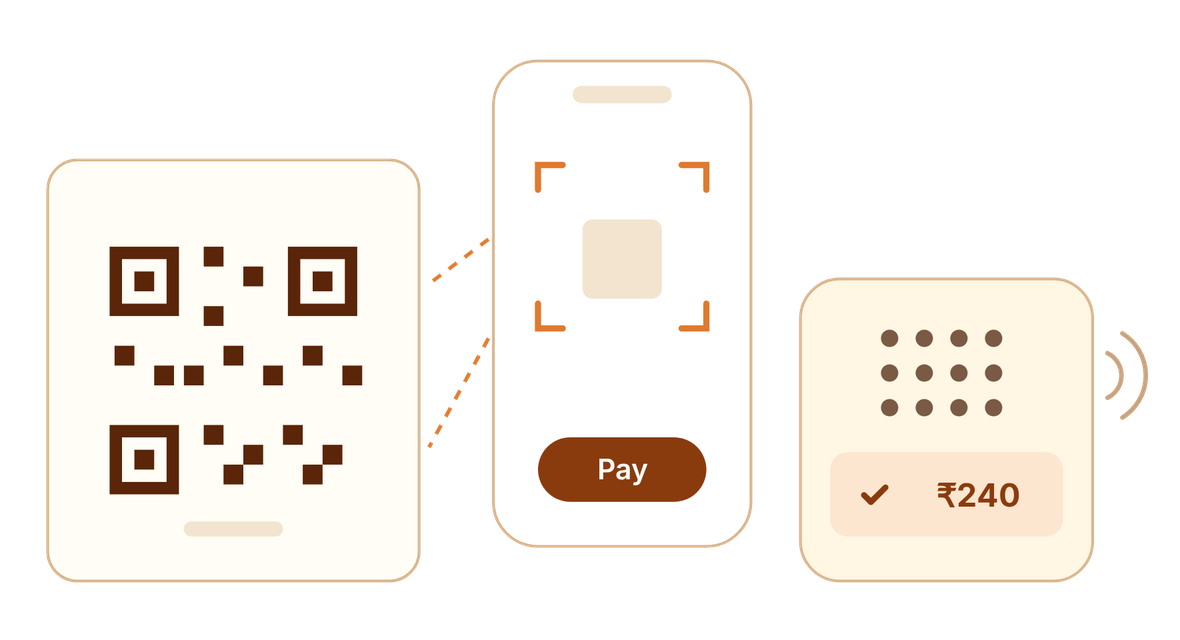
QR and UPI acceptance at the counter, without card POS terminals.
Merchant provisioning
Set up merchant, store and counter identifiers.
Static and dynamic QR
UPI, Bharat QR, collect and intent flows.
Real-time processing
Payments, refunds and reversals as they happen.
Closed-loop networks
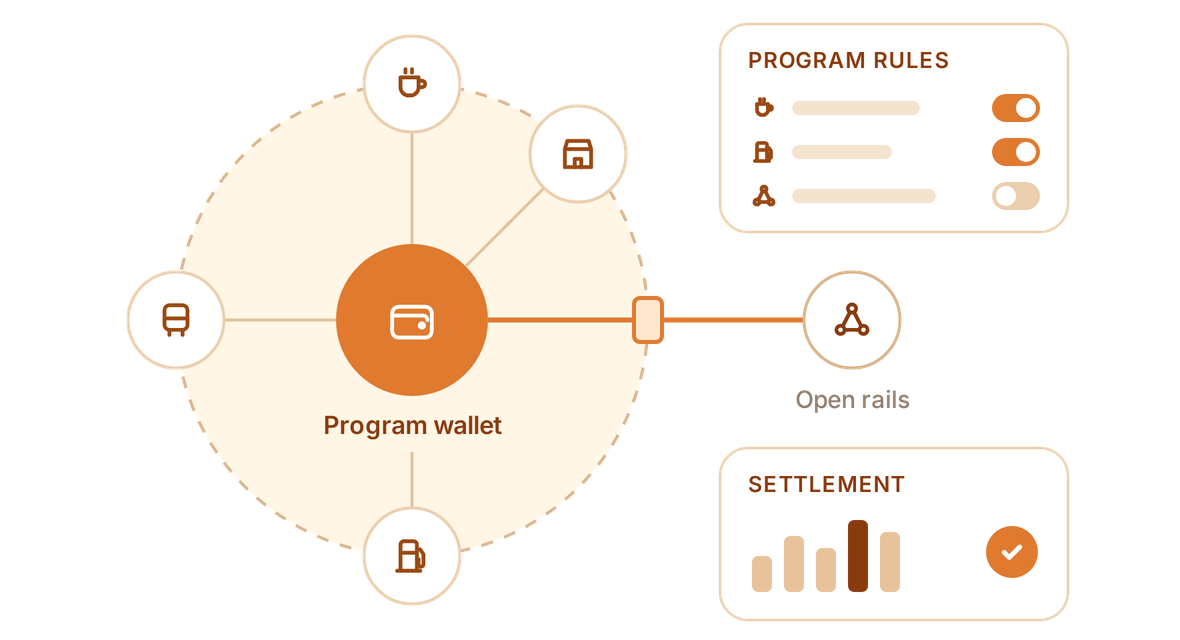
Build controlled merchant payment networks
Networks where your program sets acceptance, pricing and settlement
rules.
Define the network
Choose where an instrument works, down to the counter.
Route by context
Pick the funding source from merchant and wallet attributes.
Merchant economics
Set fees, pricing and settlement rules by program.
Hybrid networks
Combine closed-loop acceptance with open rails.
Orchestration
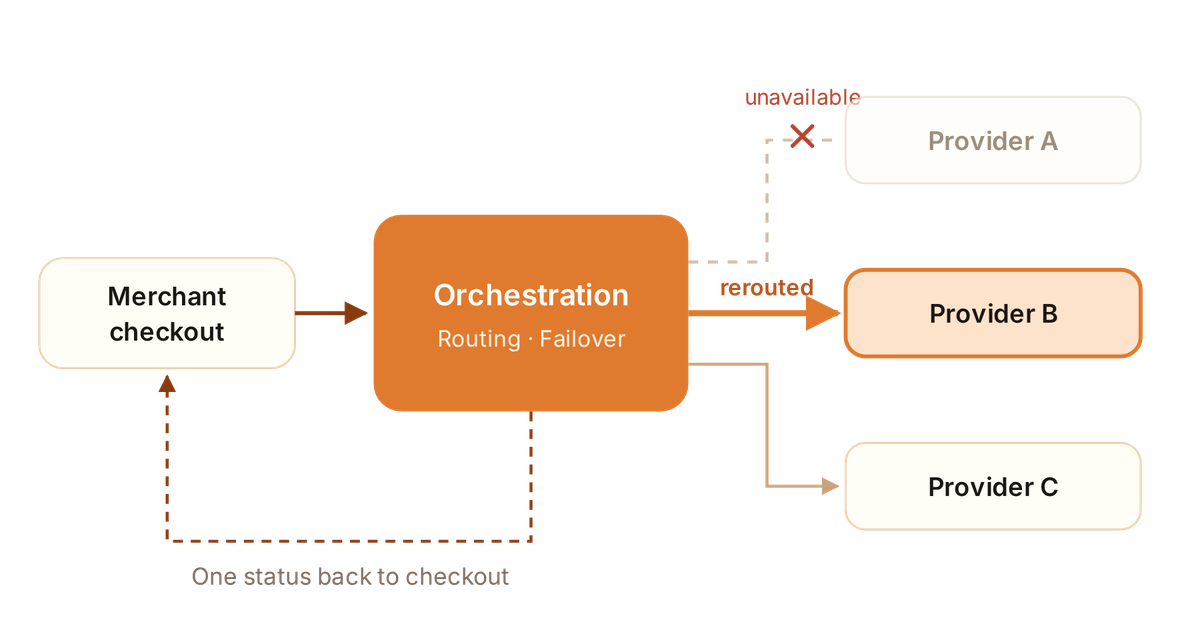
Route payments across providers and rails
Route across providers and rails, with failover and one transaction
status.
Routing logic
Route by method, merchant, availability and policy.
Provider abstraction
Many providers behind one merchant interface.
Failover
Switch paths when a provider or route is down.
Normalization
One transaction model across every provider.
One Operating Foundation
Shared capabilities across every acceptance model
Merchant onboarding, online checkout, QR acceptance and closed-loop
networks
rely on
many of the same foundational capabilities. Zeta brings these together on a common platform
so
banks can
expand merchant payment businesses without assembling a new operating stack for every
acceptance
model.